Back to Research
Pillar 02 — Objects

Transition Objects

Support carried through objects and rituals.

What if the objects we carry, touch, place, or return to helped us move between states?

Transition Objects studies the objects, anchors, surfaces, and rituals people rely on to begin, switch, recover, prepare, remember, and return.

The work begins from a small but consequential observation.

A support object is never only functional.

A warm entry surface at golden hour — a wooden tray holding keys, a wallet, and sunglasses beside a notebook, a vase, and a hanging tote
Fig. 01 — Support, identity, and care

Object study — the surfaces and objects that hold a transition.

Opening observation

Technically, it solved a problem. Emotionally, it created one.

The medical alert pendant offered safety. It made help reachable. It gave family members reassurance.

But it also carried stigma, visibility, dependence, and a change in identity. The object did not only communicate function — it communicated a new social role.

How can support become available without making a person feel reduced, exposed, corrected, or marked by care?

Functional promise
Safety Reassurance Access to help Visibility in emergency
Emotional cost
Stigma Dependence Loss of identity Feeling watched Feeling changed
Fig. 01 — When support changes the self The same object, two registers
A behavioral truth

Objects carry meaning before they carry function.

People do not experience support objects as neutral tools. Objects mediate transitions between private and visible, independent and supported, scattered and prepared, activated and grounded.

The design challenge is not simply making support smaller, prettier, or more discreet. The challenge is preserving dignity while making support available.

A traycan reduce search behavior.
A pendantcan signal vulnerability.
A lampcan protect focus.
A stonecan create a pause.
A bagcan hold readiness.
A surfacecan invite return.
A wearablecan become either a device or a companion.
The premise

The best support object does not announce what is wrong. It quietly helps the next state become possible.

What this layer studies

The things we carry, place, and return to.

Transition Objects investigates the things people carry, touch, place, prepare, or return to when capacity changes.

01

Care Objects

Objects that make support reachable without reducing the person to their vulnerability.

02

Object Anchors

Stable locations and objects that reduce search behavior, remembering, and repeated decision-making.

03

Sensory Anchors

Tactile, thermal, weighted, visual, or auditory objects that help the body return.

04

Threshold Objects

Objects used before entering, leaving, switching, calling, resting, caregiving, or beginning.

05

Rituals of Readiness

Small repeated actions that help a person prepare for the next state.

06

Wearable Form Studies

Body-adjacent objects that explore how sensing, support, identity, and dignity might coexist.

The question underneath all six:

What might care look like if the object preserved the person’s sense of self?

Object studies

Ordinary objects, more meaning than the system sees.

Each study begins with an object that appears ordinary, but carries more emotional and behavioral meaning than the system recognizes.

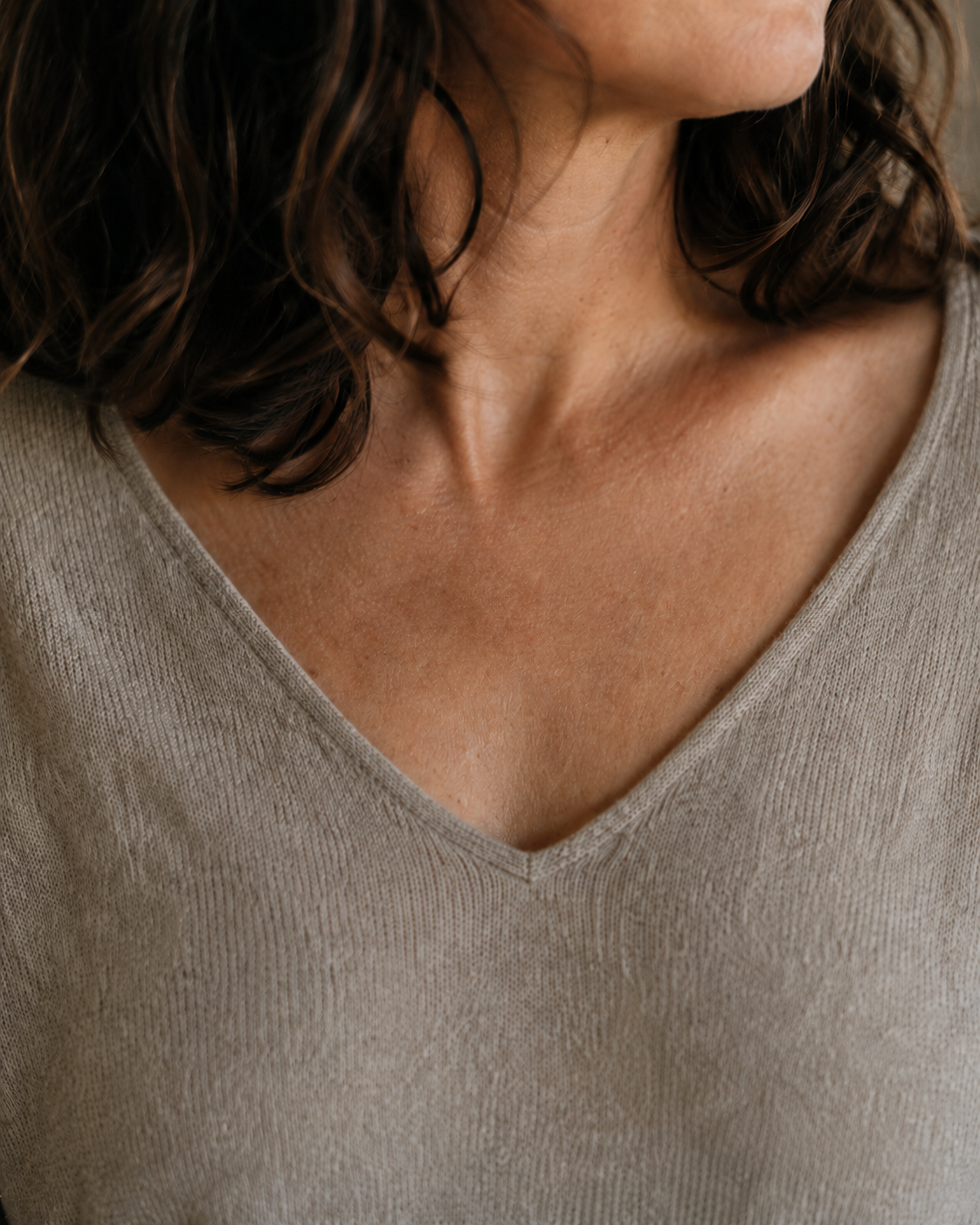
A close, warm photograph — a woman's collarbone and the base of her turned neck above a soft linen V-neck, where a pendant would rest Worn object · the body · visibility
Study 01 Field observation

The Medical Alert Pendant

When safety becomes stigma.

The pendant solved a technical problem: help could be reached quickly. But emotionally, it changed the wearer’s relationship to visibility, identity, independence, and care.

This object study asks how future support objects might preserve dignity while still enabling response.

Key tensionSafety without stigma
Human constraintDignity and dependence
Transitionindependent → supported
Evidence levelField observation / object study
Study 02 Concept / field tool

Object Anchors

Designing places where things return.

Object Anchors explore how designated surfaces, trays, bowls, hooks, shelves, or tactile markers can reduce the burden of remembering where essential items belong.

They do not ask the person to improve memory. They give memory somewhere to live.

keys medication wallet glasses phone caregiving supplies school materials departure items
Key tensionVisibility without visual chaos
Human constraintWorking memory
Transitionscattered → prepared
Evidence levelConcept / field tool
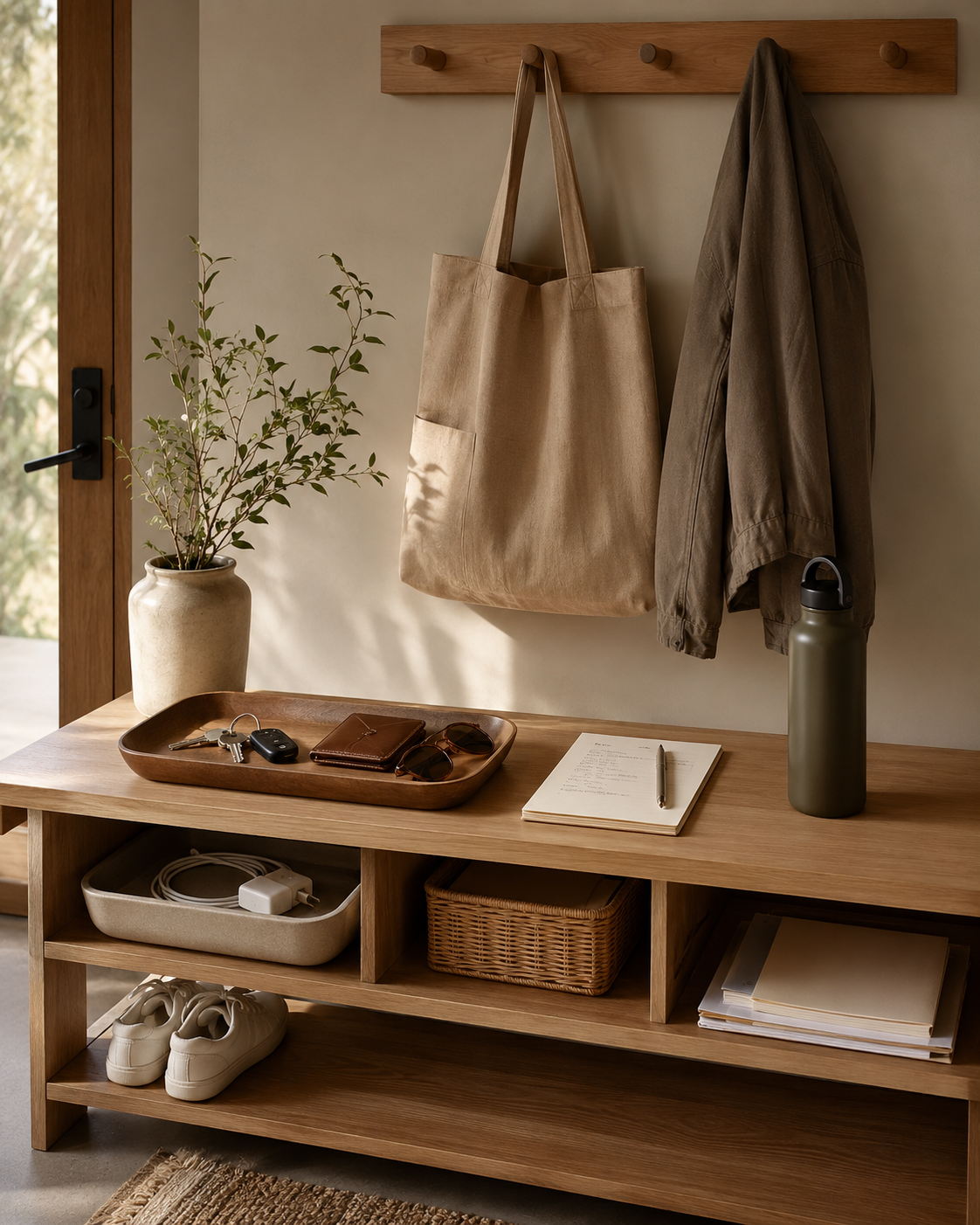
A warm entryway — a tote bag and jacket on oak pegs above a bench with a tray of keys, a wallet, sunglasses, and a notebook Tray · hooks · entry surface
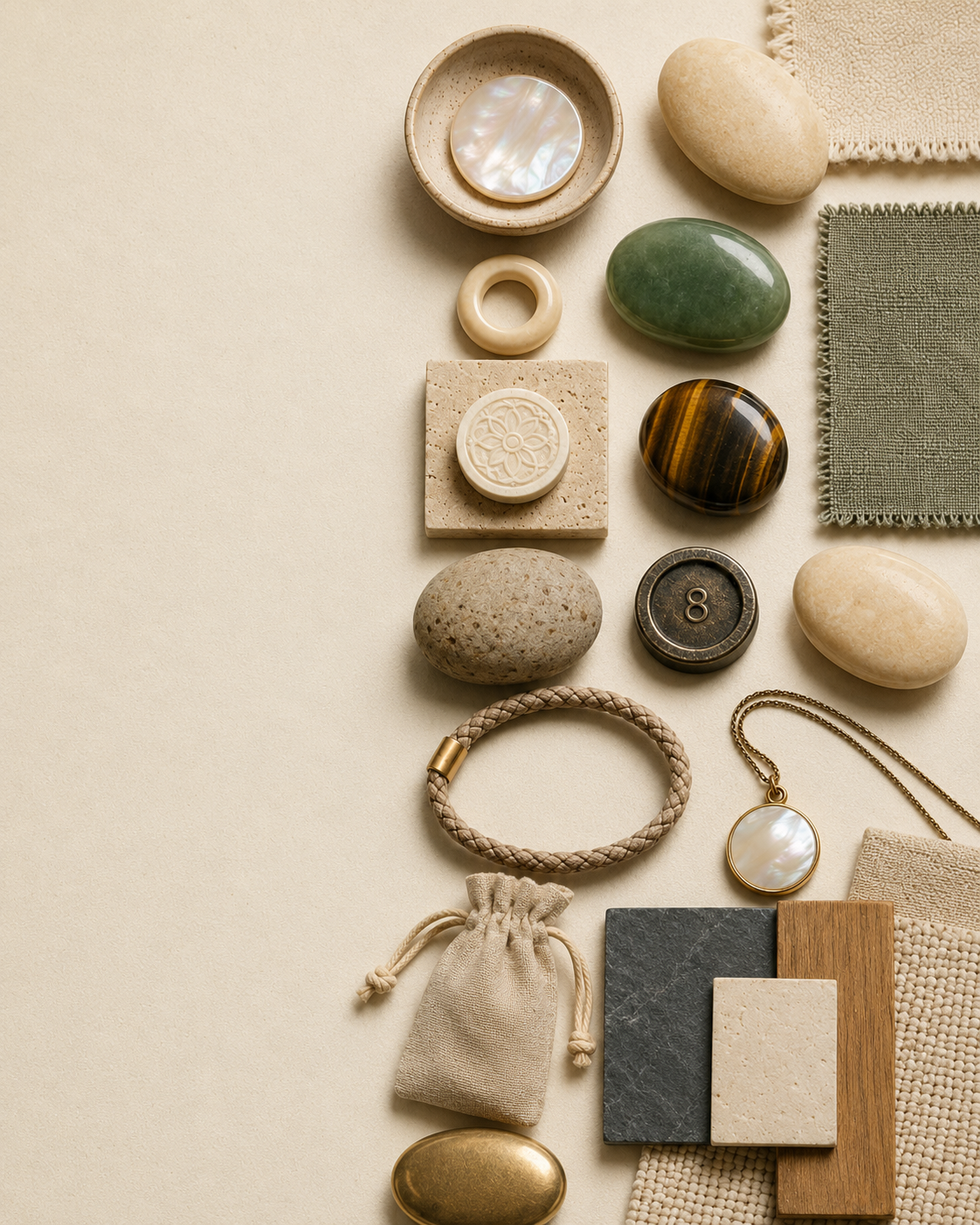
A material flatlay on warm paper — smooth river stones, a mother-of-pearl disc in a ceramic dish, jade and tiger's-eye cabochons, a carved bone ring, a woven bracelet, a linen drawstring pouch, slate and travertine chips, and a pearl pendant Fig. 02 — Material study · stone, token, fabric, pendant
Study 03 Concept / material study

Sensory Anchors

Objects that help the body return.

Sensory Anchors explore how weight, texture, temperature, material, sound, and touch may help a person pause, regulate, or re-enter a task or room.

The goal is not to force calm. The goal is to create an available point of return.

Key tensionSupport without spectacle
Human constraintRegulation and return
Transitionactivated → grounded
Evidence levelConcept / material study
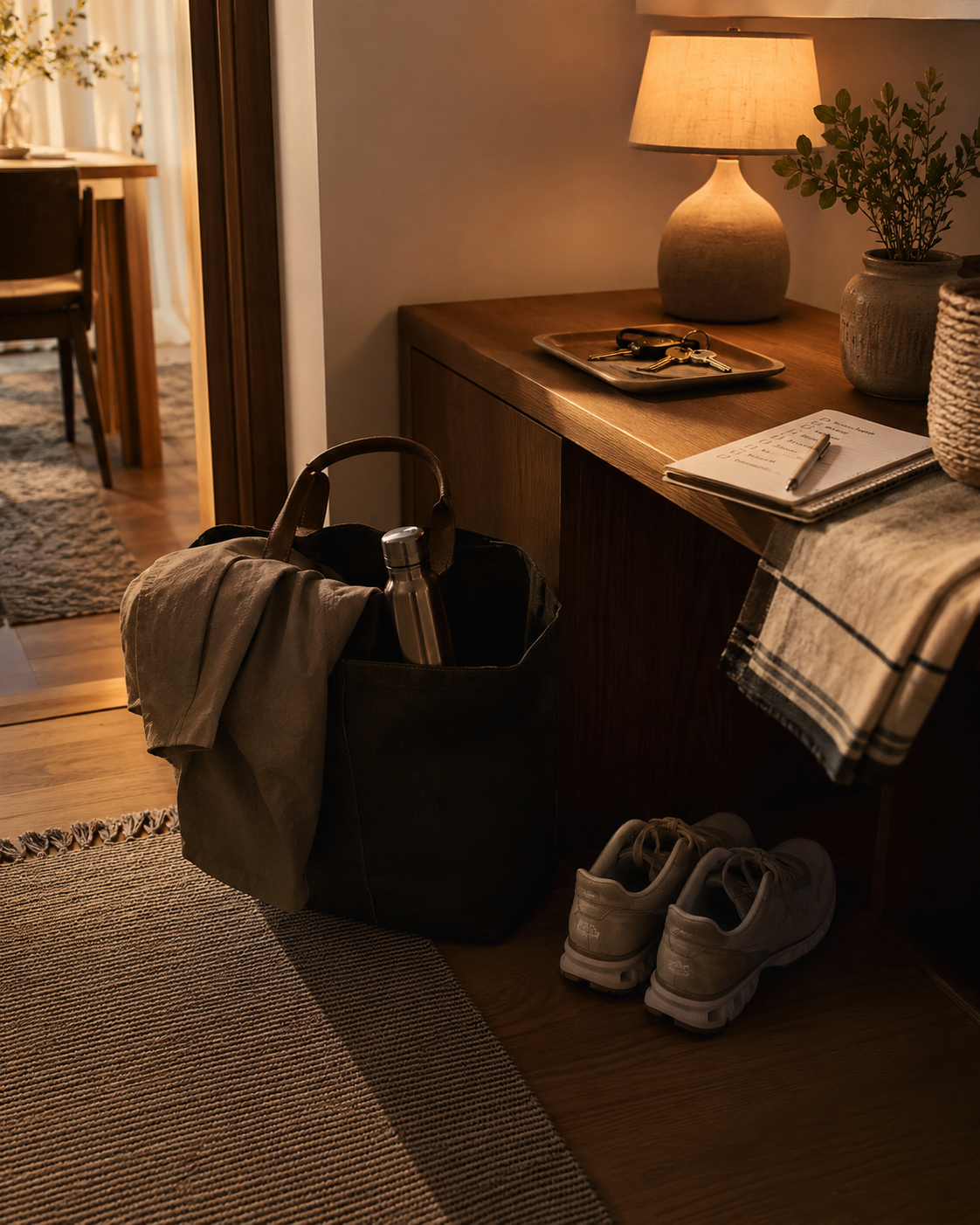
A woman pauses at a sunlit desk by a window of plants — a notebook, mug, small vase, and a wooden tray of objects in front of her Desk · lamp · tray · the threshold
Study 04 Concept / ritual study

Ritual Objects

Designing for readiness.

Ritual Objects study how small repeated interactions help people prepare for the next state.

A tray by the door. A lamp before focus. A stone before a call. A pendant before leaving the house. A surface where the day closes.

These objects do not complete the task. They mark the threshold.

Key tensionBeginning without force
Human constraintTask initiation and transition
Transitionbefore → during
Evidence levelConcept / ritual study
Design principles

Protect dignity while making support available.

Transition Objects are guided by principles that protect dignity while making support available.

01

Preserve Dignity

The object should not reduce the person to their condition, role, diagnosis, or vulnerability.

02

Support Identity

Support should fit into how a person already sees themselves, not demand a new identity.

03

Make Care Available

The object should make support easier to access without requiring explanation, performance, or disclosure.

04

Reduce Remembering

When possible, the object should hold place, sequence, meaning, or readiness so the person does not have to.

05

Invite Return

The object should create a gentle place to come back to: a surface, weight, gesture, cue, or ritual.

06

Avoid Correction

The object should not shame, score, nag, or communicate failure.

From object study to field prototype

Ways to test whether an object earns its place.

Some Transition Objects may become small-batch field prototypes, printable tools, or community-supported experiments. These are not products in the traditional sense.

They are ways to test whether an object, surface, or ritual can reduce friction, preserve dignity, or support a transition in everyday life.

Pathway 01

Printable Field Tools

Reflection prompts, object-anchor guides, one-step prompts, room setup worksheets, and pattern-mapping tools.

Open the toolkit
Pathway 02

Small-Batch Objects

Trays, anchors, tactile objects, ritual surfaces, or wearable-adjacent form studies produced in limited runs.

Pathway 03

Community-Supported Experiments

Preorder or small pilot pathways for testing whether an object deserves further development.

Pathway 04

Research Partnerships

Collaborations with caregivers, neurodivergent families, occupational therapists, clinicians, designers, and community groups.

These pathways are a way of asking the world a question, not a storefront — each one a test of whether an object deserves to exist at all.

Evidence maturity

An observation and concept layer.

Transition Objects is currently an observation and concept layer within Kutuhala Studio. The work draws from human-centered research, design ethnography, cognitive accessibility, occupational therapy, sensory design, assistive technology critique, product form studies, caregiving research, and embodied interaction.

Individual object studies vary in maturity. Some are field observations. Some are speculative concepts. Some may become printable tools or small-batch field prototypes.

Claims about improved regulation, task completion, safety, adherence, or sustained adoption remain hypotheses until tested.

Kutuhala uses object studies to ask better questions — not to overstate evidence before it exists.

The maturity ladder — this layer spans Observation and Concept
01

Observation

02

Concept

03

Prototype

04

Field Study

05

Research Program

Evidence level Observation / concept layer
What future prototypes should test

A research checklist.

Before any object can claim to help, these are the questions a future prototype would need to ask — honestly, and under real conditions.

Does the object reduce remembering?
Does it reduce search behavior?
Does it support a transition?
Does it preserve dignity?
Does it fit into existing rituals?
Does it feel supportive or stigmatizing?
Does it create visual clutter?
Does it become annoying after novelty declines?
Does it support autonomy?
Does it invite use without shame?
Does it work under fatigue, stress, or interruption?
Does it still function when the routine breaks?
Does it communicate care without exposing too much?

The most important question is not whether an object looks supportive.

It is whether the person still feels like themselves while using it.

Future hypothesis

Support objects may become more effective when they preserve dignity, reduce remembering, and help people move between states without making care feel like correction.

The central research question is not whether assistive objects can become more beautiful.

It is whether they can become more humane.

What this work suggests

The objects closest to the body often carry the most meaning.

A pendant. A tray. A key. A lamp. A stone. A surface by the door.

These objects do more than hold things. They hold transitions.

They help a person leave, return, begin, remember, prepare, pause, or ask for help.

Transition Objects asks how care might become less visible as failure — and more available as belonging.
Explore Adaptive Systems Explore Intervention Layer Work With Christine →